
Journal | March 24, 2026
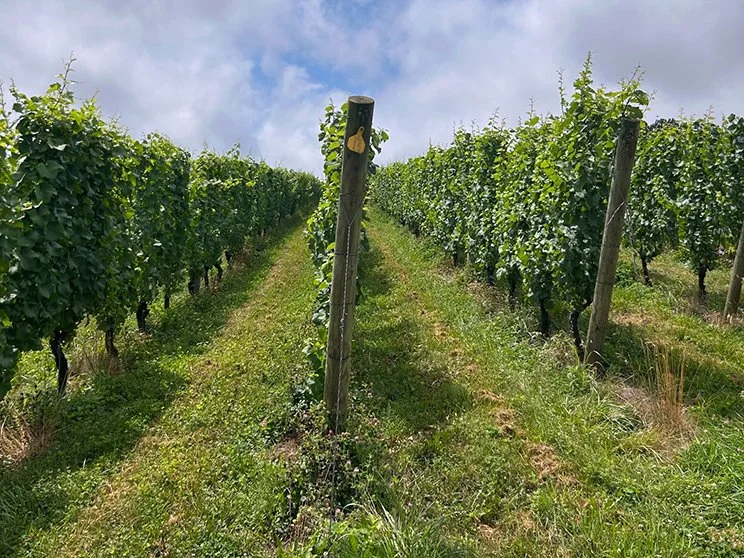
Vines in more recent years with cover crops
Native Cover Crops in the Vineyard
We’re still pruning, but the bittersweet end is in sight. Most of the pruning cuts are made at the vine heads, which are waist high, so we spend most of the day looking down or on our knees. We therefore get very intimate with the emerging flora now growing on the vineyard floor. This growth under the vines is called cover crops.
At Linden we allow a succession of native cover crops to populate the ground under the vines. The area between the vines, where the tractors drive, is kept in grass. How a winegrower manages the vineyard floor can have a direct relationship to wine style and vineyard health. Over the years we have tried different techniques. In the beginning we used a tractor side-mounted hydraulic hoe that clean-cultivated weeds under the vines. But too often vines were also mistakenly taken out (“tractor blight”). Additionally there were erosion problems from pounding thunderstorms on steep slopes.
In the early 2000s, I experimented with sowing various cover crops under the vines, but nothing stood out. One grass (creeping red fescue) seemed especially well suited. But soon this fescue over-competed and weakened the vines. My epiphany moment came from a visiting winegrower from Bordeaux. He pointed out that I already had a succession of cover crops growing naturally in the vines. I saw them as weeds. He saw them as native cover crops.
For the last twenty years I have been identifying, observing and encouraging a succession of native cover crops growing under the vines. I find it fascinating. But I understand that others may not. In any case, this growing season I will document my favorites, beginning soon with dead nettle.
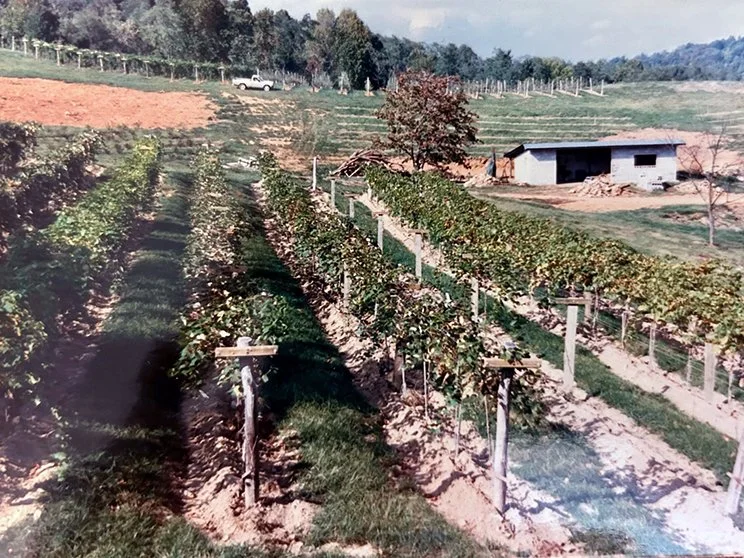
1986 - before we started cultivating cover crops
Linden Vineyards / Learn More / Latest at Linden | Hardscrabble Journal: March 24, 2026