
Journal | December 2, 2025
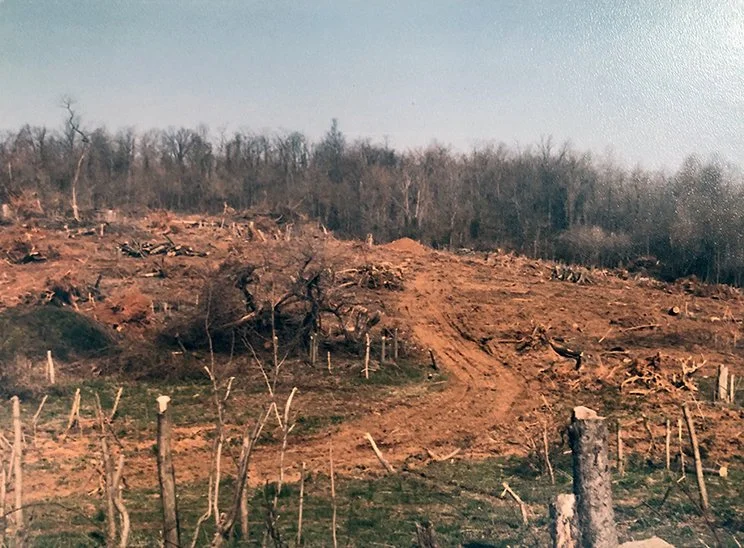
What was to become Hardscrabble was a long abandoned apple orchard that had to be cleared [1984]
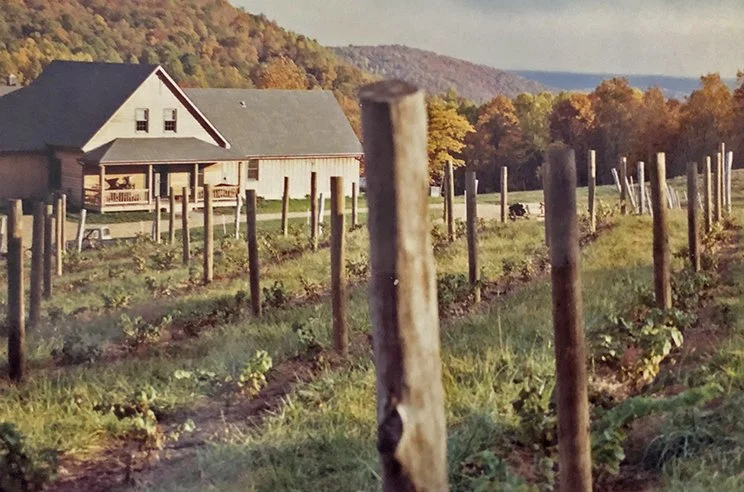
Baby vines in 1988
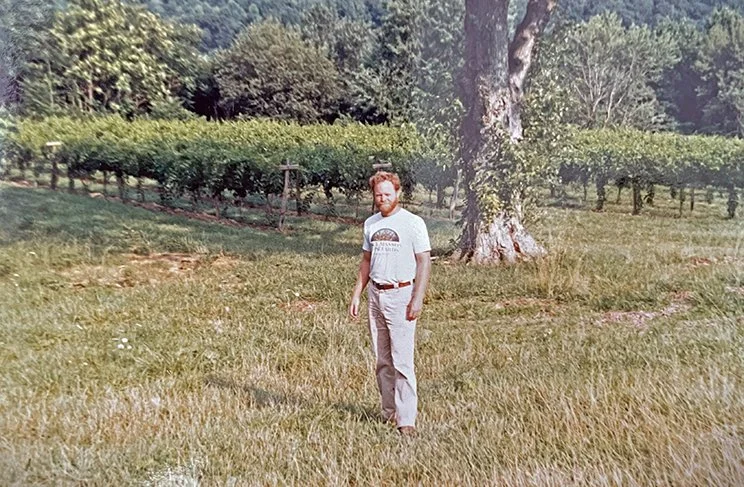
Jim Law in front of Seyval planting [circa 1989]
First of a four-part series
1987
1987 was Linden's first vintage. Over the next couple of weeks I'll write about the most significant changes and improvements that have impacted wine quality. I'll also write about forty years of changes to the cellar, sales and marketing, and the business side of the operation since we started in 1985.
The Vineyard | Then and Now
In 1981 I was hired as a winemaker for a startup vineyard and winery in the Shenandoah Valley. I fell in love with Virginia, except for the hot summers. I preferred cooler climate wine styles, so I decided that for my own operation I would have to go up. Elevation, slope, drainage all became my mantra in finding my right place. This series is about change, but there is one constant and that is the land. My first decision was a good decision. This made the rest of the journey much more rewarding.
Planting a vineyard on a virgin site comes with mistakes. Those mistakes can show up relatively quickly (dead vines, weak or uneven growth) or painfully slowly (mediocre wine quality). Nature provides the site, but the winegrower plants it. In Virginia we were clueless about the relationships between soil and grape variety. Common knowledge was that soils needed to be well drained, but our fledging industry had not yet begun to dive deeper than that. Hardscrabble, as my site became known, has a diversity of soil types and it took decades to understand soil/vine relationships. It was not until I started traveling to France that the epiphanies occurred.
That's when we started to rip out vineyard blocks and replant according to soil characteristics. Every winegrape variety has soil preferences, which mainly revolve around plant available water (PAW) and fertility. Chardonnay loses verve and energy if the soils are too droughty. The Cabernets make thin, uninspiring wines in moisture and nutrient-rich clay. Our initial plantings had mostly missed the mark. On the plus side, ripping out vineyard blocks provided a clean slate to reestablish vines in a more thoughtful way.
In the 1980s vineyard design was dictated by tractor size and ability (we still have our original 1979 wide-body two-wheel drive Ford, but it can no longer fit into the narrow vineyard rows). Our best slopes were steep and too dangerous for standard tractors. Eventually specialized European vineyard tractors became available in the US. Only then were Hardscrabble's steeper slopes planted.
Our initial vines were spaced far apart. In the 1980s I had observed excessively vigorous vines throughout the state and wanted to give the vines lots of space. What I didn't realize was that our mountain soils were not so fertile nor water retentive. Additionally, it is normal for vines to slow down and take up less space as they get older. We still coax along the original 1985 planting of Chardonnay, but the old vine growth can no longer fully fill the trellis.
Four decades of hard decisions and meticulous fine-tuning has noticeably improved wine quality. Now the new challenge is climate change. Our experimental variety trial vineyard is now in place to shorten this new learning curve. If nothing else, we are now experienced in adaptation.
Linden Vineyards / Learn More / Latest at Linden | Hardscrabble Journal: December 2, 2025